Fountain Hills, AZ Roofers
Roofing Company in Fountain Hills, AZ — Replacement, Repair & More
- Materials built for Arizona heat and storms
- Licensed and insured roofing specialists
- Family-owned and locally trusted contractor
- 80+ verified 5-star Google reviews
Contact Us Today
Why Fountain Hills, AZ Homeowners Need a Local Roofing Expert
The Arizona climate is brutal on roofing materials, but Fountain Hills adds its own variables. The town’s elevation — ranging from roughly 1,500 feet at the southern edge to over 3,000 feet up in the foothills — produces a wider 24-hour thermal swing than the valley floor. That expansion and contraction is what cracks tile, fatigues flashing, and slowly destroys underlayment. Add 110-plus-degree summer surface temperatures, monsoon rains that arrive sideways, and dust storms that grind grit into every seam, and you have a climate that punishes anything less than properly specified and properly installed roofing.
Fountain Hills is unusual in that almost the entire community was originally master-planned, with the first phases breaking ground in the early 1970s. A significant portion of the housing stock now sits on 40 to 50-year-old underlayment, even when the tile itself still looks intact. Most neighborhoods are governed by HOAs with architectural review committees that restrict roof materials, colors, and tile profiles — you cannot simply install whatever you want. The town also has a high concentration of part-time residents and second homes, which means small problems often go unnoticed until they become major water-damage events.
A roofing contractor who has only worked in central Phoenix will miss things here. They will not know which HOAs require color-matched tile pulls, which subdivisions have a history of foam roof failures from the early 2000s, or how wind uplift behaves coming off the McDowells. Local experience matters because the failure points are local — and so are the permitting requirements, the inspection process, and the HOA submittal paperwork.
Schedule Your FREE Roof Inspection Today
Roofing Services We Offer in Fountain Hills, AZ
Zona Roofing handles every type of residential and commercial roofing work El Mirage homes and businesses need.
Roof Replacement in Fountain Hills
For homes in the original Fountain Hills neighborhoods — most built between 1972 and the mid-1990s — replacement is a matter of when, not if. Concrete tile typically outlasts the underlayment beneath it by decades.
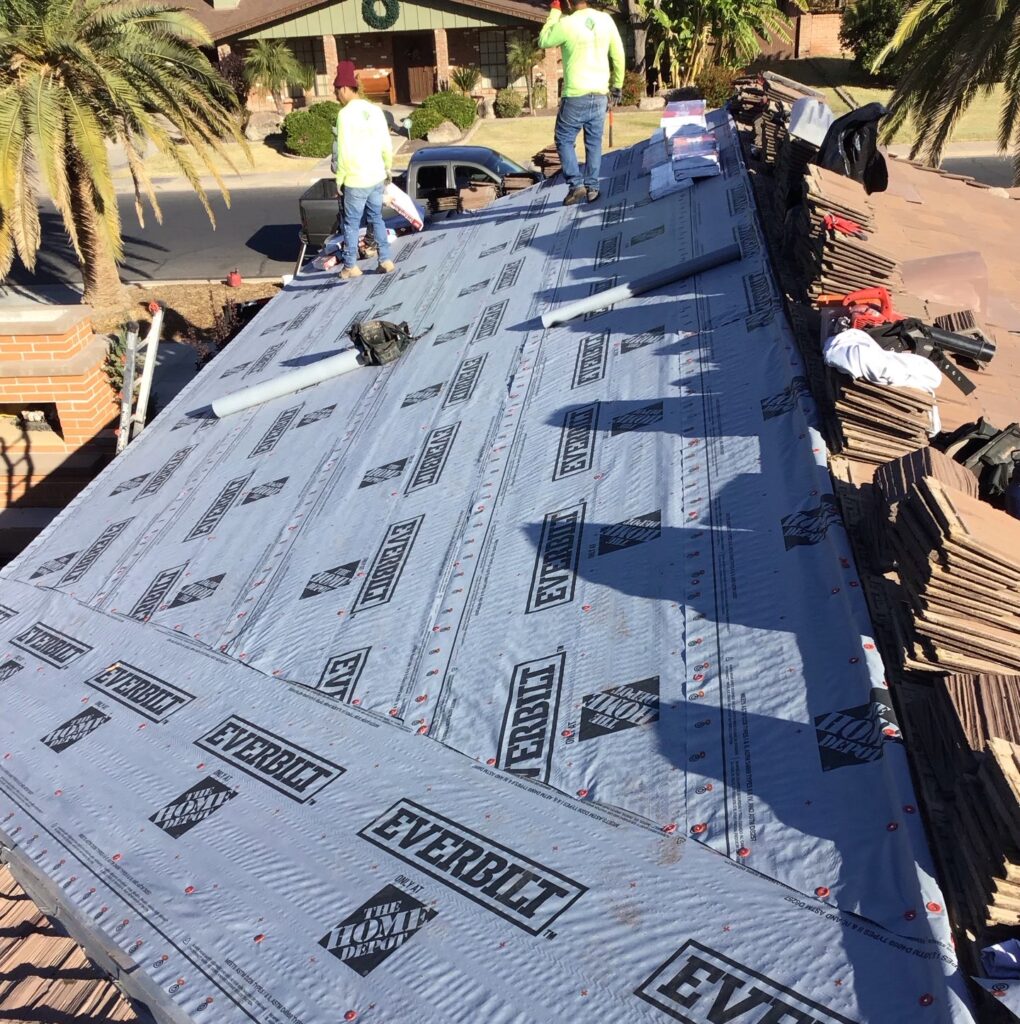
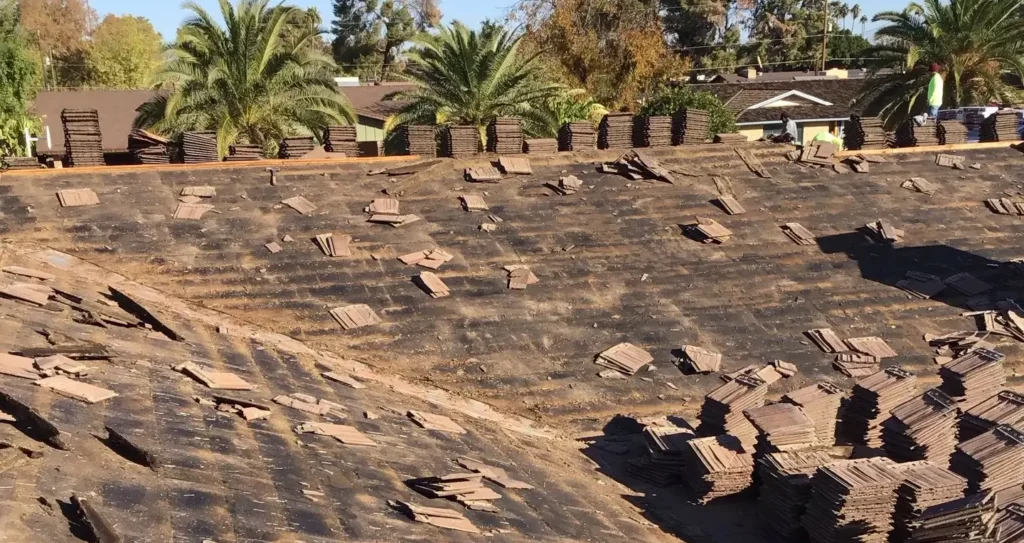
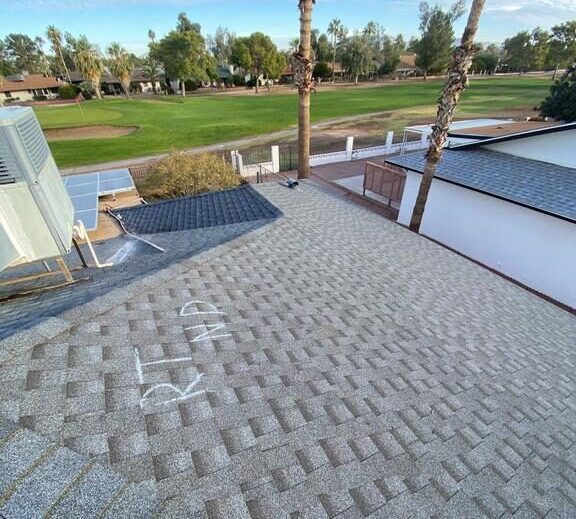
We commonly pull tile that still looks usable, replace the failed underlayment with modern synthetic or two-ply systems, and reset the original tile if it meets HOA requirements. For homeowners ready for a full new system, we install asphalt shingle, concrete tile, and clay tile from Owens Corning, Malarkey, and GAF — all manufacturers we are certified by, which means access to extended warranty options up to 50 years.
Replacements run roughly two to six days on-site for most single-family Fountain Hills homes, depending on roof size, complexity, and whether HOA inspections add to the timeline. We are Owens Corning Platinum Certified, Malarkey Emerald Pro Certified, and GAF Certified — three certifications very few Arizona contractors carry simultaneously. We offer 0 payments for 12 months and low monthly payment financing options (subject to credit approval), so most homeowners can replace their roof without draining cash reserves.
Roof Repair in Fountain Hills
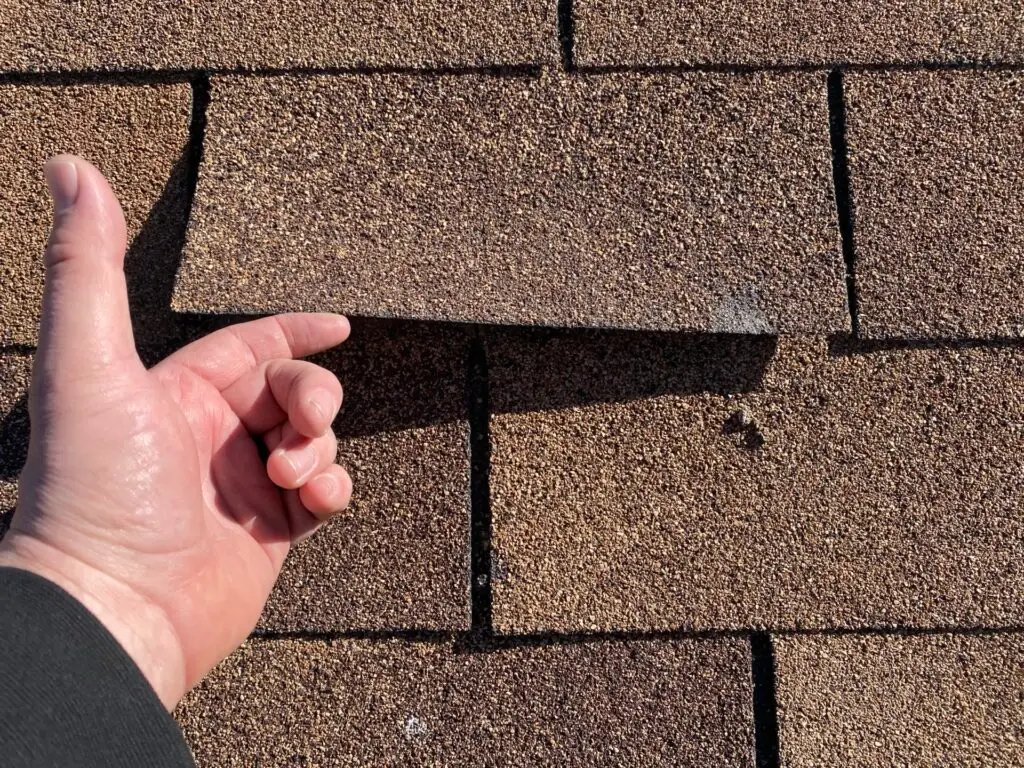
The most common repair calls we get from Fountain Hills fall into three buckets: slipped or cracked tiles after monsoon wind events, flashing failures around skylights and HVAC penetrations on flat foam roofs, and underlayment leaks at valleys and ridges on older tile roofs. Tile failures are usually visible from the ground or the driveway. Foam and underlayment failures are not — they typically show up as a brown stain on the ceiling well after the actual damage occurred.
A repair done correctly buys you years. A repair done by a handyman or a one-truck operator usually buys you one or two monsoons before the same area fails again. We inspect the surrounding field every time, because a leak rarely exists in isolation — there is almost always a second compromised area developing nearby. When a repair is no longer the right call, we say so directly rather than charging for work that will not last.
Roofing Insurance Claims in Fountain Hills
Fountain Hills sees a meaningful share of storm-related insurance claims, mostly from monsoon wind events and the occasional hail event rolling through the McDowell range. The damage we most often document is wind-displaced tile, broken or fractured tile from windborne debris, and granule loss on shingle roofs after a heavy hailstorm. The challenge is that most of this damage is not visible from the ground — homeowners typically only learn they have a claim after a proper inspection.
We perform free inspections, document damage with photographs and elevation drawings, and meet directly with insurance adjusters on-site when possible. We are not a public adjuster, but we know how to write a scope of repair that aligns with carrier requirements so claims move forward instead of getting denied or underpaid. Homeowners pay their deductible — we handle the materials specifications and the paperwork on the roofing side.
Frequently Asked Questions — Fountain Hills Roofing
My HOA says I need to match the existing tile — can you do that?
How long do roofs in Fountain Hills typically last?
How long does a roof replacement take from start to finish?
What financing and warranty options do you offer?

About Fountain Hills, AZ
Fountain Hills is a master-planned community of roughly 24,000 residents in northeastern Maricopa County, bordered by Scottsdale to the west and the Fort McDowell Yavapai Nation to the east.
The town broke ground in 1970 under McCulloch Properties and incorporated in 1989, taking its name from the landmark fountain at Fountain Park — once the tallest fountain in the world.
The community sits in the foothills of the McDowell Mountains at elevations ranging from about 1,500 to over 3,000 feet, which produces a slightly cooler climate than the valley floor and stronger wind exposure during monsoon season.
The housing stock skews older, with a substantial share of homes built between the 1970s and 1990s, and the population includes a meaningful number of part-time residents and second-home owners.
Serving Fountain Hills and Surrounding Areas
Beyond Fountain Hills, Zona Roofing serves nearby communities throughout Maricopa County, including Scottsdale, Rio Verde, and Mesa. If you own property in or near Fountain Hills and need a licensed Arizona roofing contractor, we have the local experience and certifications to handle the project.
Zona Roofing's Maintenance Program
Water is the most destructive force a home can encounter, and in Fountain Hills — where a substantial share of the housing stock dates to the original 1970s and 1980s master-planned phases, and where elevation and wind exposure off the McDowell Mountains amplify monsoon stress — a roof leak is its most common and most preventable entry point. What starts as a minor intrusion point — a failed sealant around an HVAC curb, a cracked tile that has exposed the underlayment beneath it, a flashing seam that lifted during a monsoon and never fully reseated — allows moisture to move silently through insulation, into framing, and across ceiling drywall long before it becomes visible inside the home.
By the time a water stain appears on the ceiling of a Fountain Hills home, the damage behind the drywall is typically months old and mold has often already begun forming in the cavity. Remediation costs for water-damaged framing, insulation replacement, drywall repair, and mold treatment routinely run two to three times the cost of the roof repair that would have prevented it. Fountain Hills’ aging tile underlayment — much of it now 40 to 50 years past installation — means a significant share of roofs in town are at or past the expected service life of the layer that actually keeps water out. Add wind funneling through the McDowell Mountain pass during monsoon season, and you have additional stress on systems that are already showing their age.
In a market where replacement budgets are tight, staying ahead of maintenance is the most cost-effective roof strategy available. When flashings are resealed on schedule, slipped or cracked tiles are reset before monsoon season, foam roofs are recoated on their proper cycle, and penetrations around HVAC equipment are inspected annually, the pathways water uses to enter a structure simply don’t exist. Maintenance doesn’t just protect your roof — it protects everything underneath it.
TILE OR SHINGLE ROOF: OPTION #1
- Full service roof inspection
- Blow off and clear debris throughout the roof
- Priority Scheduling - Get in front of the line
- 5% discount on all future services
TILE OR SHINGLE ROOF: OPTION #2
- Full service roof inspection
- Repair mortar balls as needed
- Blow off and clear debris throughout the roof
- Tar and seal penetrations
- Priority Scheduling - Get in front of the line
- 5% discount on all future services
FLAT ROOF: OPTION 3
- Full service roof inspection
- Blow off and clear debris throughout the roof
- Priority Scheduling - Get in front of the line
- 5% discount on all future services